Pages

Showing posts with label Top 10. Show all posts

Tuesday, December 5, 2017

Top 10 Wonders of The World

There is the list of top 10 wonders of the world which are the masterpiece of the skill and handwork of the people of that era. Today we become astonished to see these wonders, that in so remote ages without any modern technology and machine, how so great construction were made. You can also visit the 10 Wonders of the Ancient World.

Top 10 Wonders of The World

10. Roman Baths
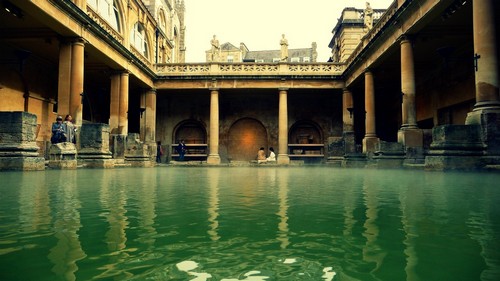
roman baths
The famous Roman Baths complex is a site of historical interest in Somerset. The house is a well-preserved Roman site for public bathing. It’s a reconstruction of the previously destroyed baths. It was destroyed in the 6th century, reconstruction of the baths occurred over time with the last additions being done in the late 1800s.
The Baths are a major tourist attraction of modern world. They receive more than one million visitors a year. It was featured on the 2005 TV program Seven Natural Wonders as one of the wonders of the West Country. Visitors can see the Baths and Museum but cannot enter the water.

9. Leaning Tower of Pisa
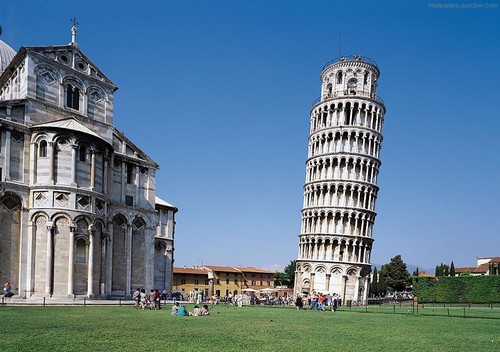

This tower was build first in Pisa, a city of Italy in August 14, 1173. It is known due to its inclinations towards right side. Till now it is stable and nothing happened to it instead of its tilt.

8. Colosseum
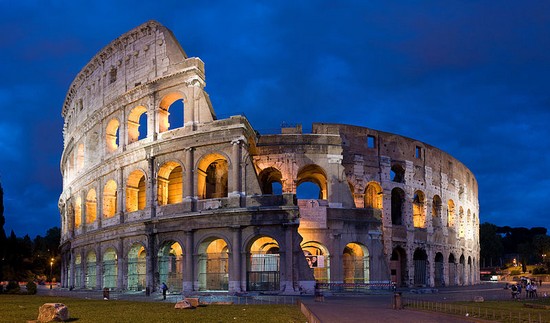

The Colosseum, or the Coliseum, originally the Flavian Amphitheatre is an elliptical amphitheatre in the centre of the city of Rome, Italy. This is one of the greatest architecture ever built in the history of Rome. The Colosseum was originally known as the Flavian Amphitheatre and is the largest amphitheater to have ever been built in the Roman Empire. It is a circular structure that occupies a site east of the Roman Forum. This Amphitheater was built to organize gladiator contests, dramas and games like hunting animals, constructing mock sea battle and the public could also view it in the open, and cheer their favorites. See also; 10 Eye-Popping Gorgeous Roman Theatres.

7. Chichen Itza


It was founded by the Maya civilization in 400 AD and it is located in the north central, north of Yucatan Peninsula now called Mexico. Chichen has a history that is 1500 years old and is located 75 miles from Merida. It is said to have been the main regional point for different ceremonies. During the earlier days & time, it was governed by priests. Chichen means “At the mouth of the well of Itza”. The word Chi stands for ‘mouth’, Chen for ‘well’ and Itza for ‘the Itza tribe’. The main belief is that people were thrown from the top as a sacrifice to make their god happy and the ones who could survive were the ones who were believed to be seers.

6. Hagia Sophia
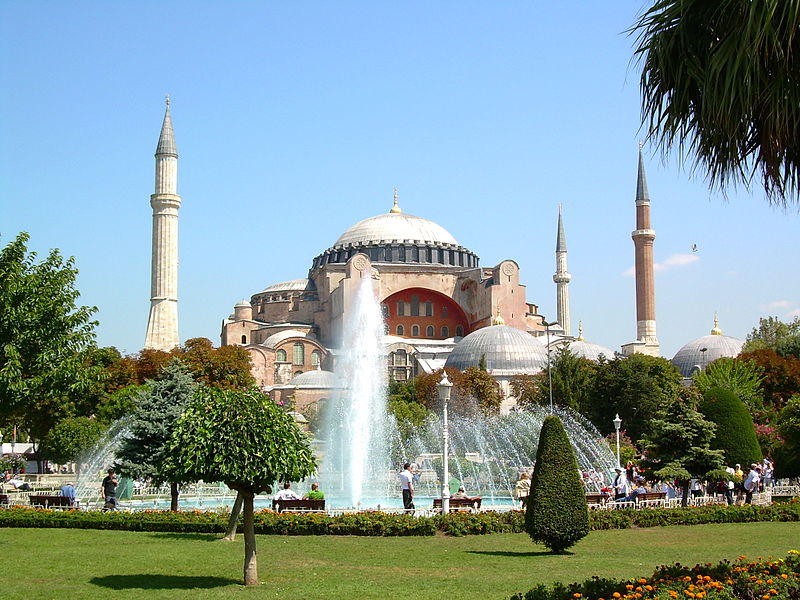
Hagia Sophia
The masterpiece of construction, Hagia Sophia is a former Christian patriarchal basilica (church), later an imperial mosque, and now a museum in Istanbul, Turkey. Hagia Sophia is currently the second-most visited museum in Turkey, attracting almost 3.3 million visitors annually.
From its initial conversion until the construction of the nearby Sultan Ahmed Mosque (Blue Mosque of Istanbul) in 1616, it was the principal mosque of Istanbul. The Hagia Sophia served as inspiration for many other Ottoman mosques, such as the Blue Mosque, the Şehzade Mosque, the Süleymaniye Mosque, the Rüstem Pasha Mosque and the Kılıç Ali Paşa Mosque

5. Machu Picchu
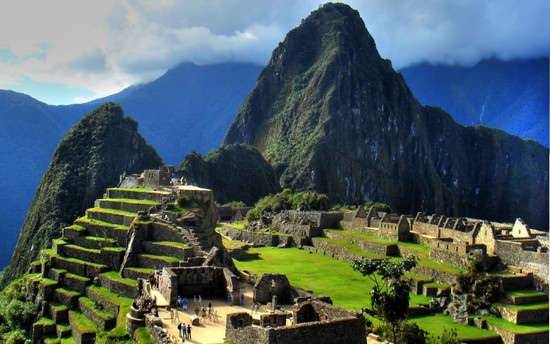

Machu Picchu is the pre Columbian, Inca empire site that is located almost 8,000 feet above the sea level. The site is located on a mountain ridge above the valley of Urubamba in Peru. The city is also called the “lost city of Incas”. Machu Picchu was built around 1450, at the height of the Inca Empire. It was abandoned just over 100 years later, in 1572, as a belated result of the Spanish Conquest.
Machu Picchu was declared UNESCO World Heritage Site in 1983. In 2007, it was voted one of the New Seven Wonders of the World in a worldwide Internet poll. See also; 10 Most Iconic Places to Photograph in the World.

4. Taj Mahal of Agra
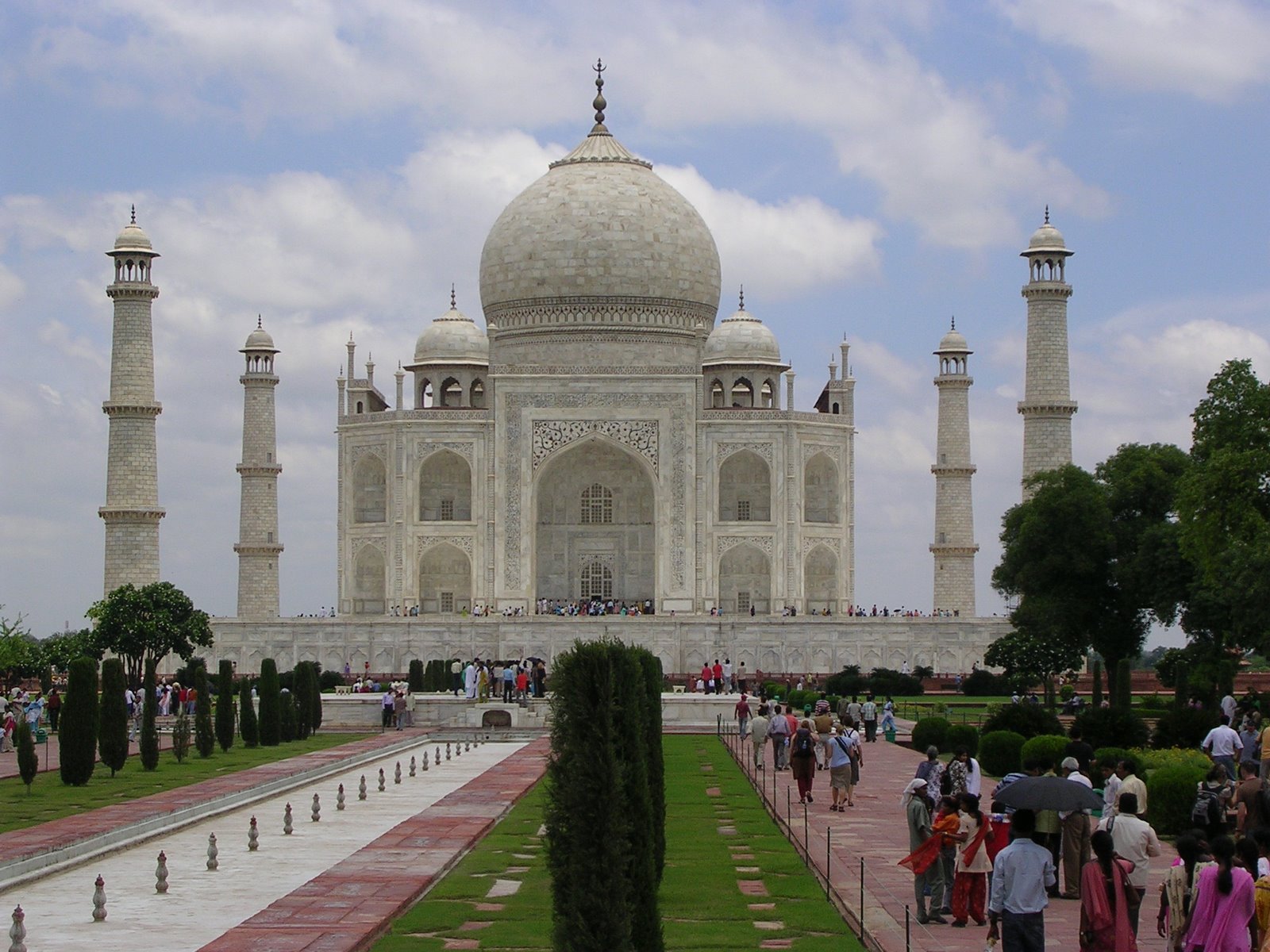
Taj Mehal of Agra
It was constructed by famous Mughal ruler Shah Jahan in memory of his beloved wife Mumtaz Mahal. The Taj Mahal is regarded as the best example of Mughal architecture and is widely recognized as “the jewel of Muslim art in India”. It is one of the world’s most celebrated structures and a symbol of India’s rich history. The Taj Mahal attracts more than 3 million visitors a year. In 2007 it was declared one of the top 10 Wonders of the World.

3. Cristo Redentor Statue
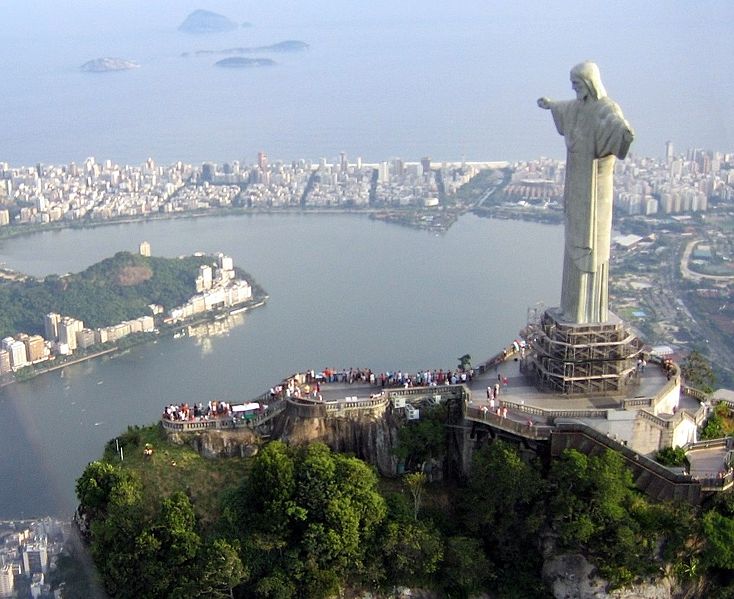
Cristo Rendetor Statue
It is largest Art Deco statue in the world and the 5th largest statue of Jesus in the world. A symbol of Christianity across the world, the statue has also become a cultural icon of both Rio de Janeiro and Brazil, and is listed as one of the New Seven Wonders of the World. It is made of reinforced concrete and soapstone, and was constructed between 1922 and 1931.

2. Petra
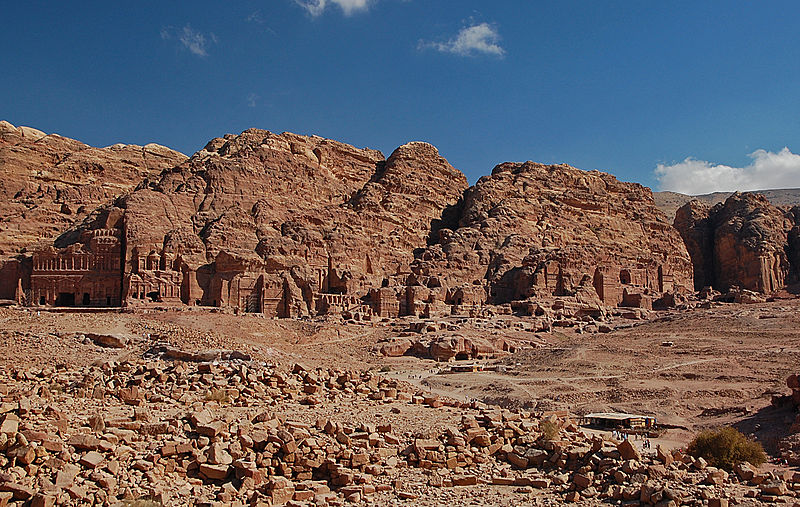
General view of Petra
It is an archeological city of Jorden that is famous for its rock-cut architecture and water conduit system. Another name for Petra is the Rose City due to the color of the stone out of which it is carved. Established during 312 BCE as the capital city of the Arab Nabataeans, it is a symbol of Jordan. It lies on the slope of Jebel al-Madhbah in a basin among the mountains which form the eastern flank of Arabah (Wadi Araba), the large valley running from the Dead Sea to the Gulf of Aqaba.
Petra was named amongst the New 7 Wonders of the World in 2007. It is Jordan’s most-visited tourist attraction and one of the “Places to See Before You Die”.

1. The Great Wall of China
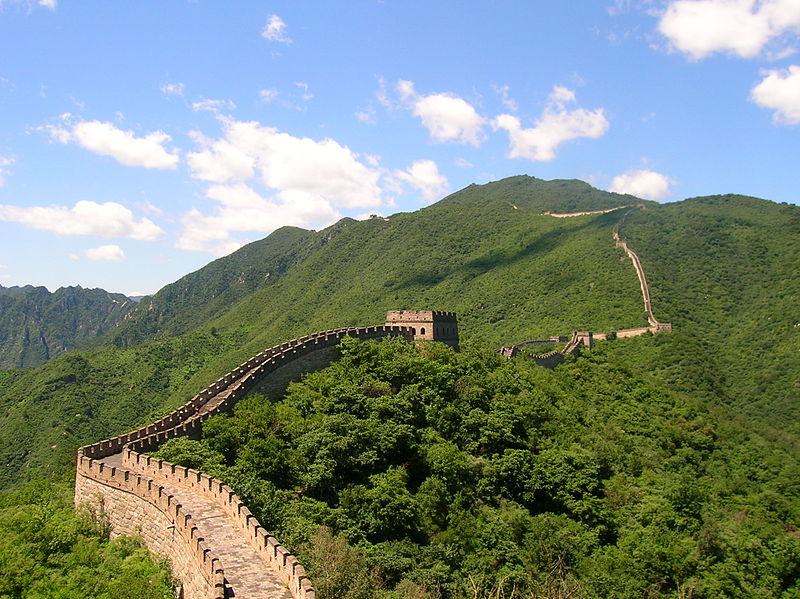
Top 10 Wonders of The World
Considered one of the New Seven Wonders of the world, the Great Wall of China was constructed 7th century BC. It is a series of fortification built to protect the Chinese states and empires against the raids and invasions of the various nomadic groups of the Eurasian Steppe.
Source: Wonderslist

Saturday, December 2, 2017

Top 10 Indian Entrepreneurs

India is the world's largest democracy and its economy has been growing rapidly over the past few decades. As a country, it also holds the second largest native population behind China. Not surprisingly, India has produced a number of billionaire businessmen and women. Although there are still many poor among the Indian population, the country maintains a long tradition of entrepreneurship and wealth creation.

Some of India's Notable Entrepreneurs
Dhirubhai Ambani (1932-2002) started out humbly by selling traditional snacks to religious pilgrims. His business soon grew, and he expanded and diversified, eventually building India's largest private company, Reliance Industries. Reliance has interests in telecommunications, power generation, information technology, consumer goods and logistics. Ambani's sons now run Reliance and are some of India's wealthiest people: Mukesh Ambani, 57, is worth over $18.6 billion and Anil Ambana, 55, is worth an estimated $5.1 billion.

Jehangir Ratanji Dadabhoy Tata, or JRD Tata (1904-1933) was born in Paris to Indian and French parents. He was trained as an aviator in Europe and later became India's first commercial airline pilot. Working for the family business, TATA group, he set out on his own and built TATA airlines, which ultimately became the modern Air India. By the time of his death, TATA owned nearly 100 different businesses across many industries. Notably, his automobile venture, Tata Motors (TTM), produces economical automobiles that nearly all working Indians can afford to own. JRD Tata is descended from Jamshetji Tata who founded the TATA group of companies in the mid-1800s.

Nagavara Ramarao Narayana Murthy, age 68, co-founded Indian IT giant Infosys (INFY) with an initial investment of 10,000 rupees, or just a few hundred dollars in today's money. He is often referred to as the father of the Indian IT industry, serving as CEO of Infosys from 1981 until 2002, and then its chairman until 2011. Infosys currently has a market capitalization of around $40 billion.

Azim Premji, 69, is worth an estimated $15.3 billion and is the chairman of Wipro Industries (WIT), a diversified software and technology company that many have compared to Microsoft. Premji is sometimes referred to as India's Bill Gates as a result.

Lakshmi Niwas Mittal, 64, began his career working for his father's steel business. He later set out on his own due to family infighting and created what is now one of the largest steel makers in the world, ArcelorMittal (MT), which has a market capitalization of $16 billion. Mittal himself is worth nearly $17 billion.

Ghanshyam Das Birla (1894-1983) started his first company in the early 1900s operating a cotton and textile mill. By 1919 Birla's businesses also included significant paper and sugar production. By the time he died, Birla Group was a multi-sector global conglomerate. His son Kumar Birla now runs the company and commands a net worth of $7 billion.

Dilip Shanghvi, 59, started Sun Pharmaceuticals in 1982 with a meager 10,000 rupee investment. Today, that investment has grown to a value of nearly 2 trillion rupees, making Sun India's largest pharmaceutical company. Today, Shanghvi has a net worth of around $12.8 billion.

Mukesh "Micky" Jagtiani, 62, is an Indian businessman who has spent most of his life outside of India. He was educated in Mumbai and Beirut, eventually settling in London. While in London, he dropped out of college and began driving a taxi before starting his first company which eventually grew into the retail and real estate giant Landmark, now based out of Dubai. Landmark has expanded into e-commerce, creating India's version of Amazon (AMZN). Jagtiani is worth over $5 billion.

Shiv Nadar, 69, founded HCL Infosystems in 1976 with an investment of a few thousand dollars, selling calculators and microcomputers. HCL soon expanded to Singapore and the far east, generating over 1 million rupees in sales not long after its expansion. HCL has continued to grow making Nadar a billionaire worth over $11 billion.

Ardeshir Godrej (1868-1936) co-founded the Godrej Group, a diversified conglomerate with interests in real estate, consumer products, security, household appliances, and industrial tools. The company had modest beginnings — Adreshir and his brother succeeded at locksmithing after failed ventures into hand fashioned medical devices. Godrej Group was founded with a 3,000-rupee investment, and the Godrej companies are worth over half a trillion rupees today.

Source: InvestoPedia

Top 10 MBA Colleges in India: Check Fee structure, Average Placement, Exams & Cut off

IIM Calcutta, Ahmedabad, Bangalore and Indore are not the only top B-schools that figure among the top 10 MBA colleges in India in the ranking 2017. The list of top 10 MBA colleges also includes the top private MBA colleges XLRI, SPJIMR, MDI, IMI, Faculty of Management studies-University of Delhi; Private university like NMIMS, Mumbai among others.

While the top ranked IIM Calcutta is ‘3 crowned’ with most reputed international accreditations of AACSB, AMBA and EQUIS, one of the top 10 MBA colleges, FMS Delhi is without any international accreditation. But FMS Delhi is considered to be the highest RoI B-school in the country.

These top 10 MBA colleges with varying fee structure accept different entrance MBA exam scores and therefore all these top MBA colleges have different exam score cut offs also. While IIMs, FMS, MDI, IMI accept only CAT scores, XLRI accepts only XAT score and NMIMS only NMAT scores. SPJIMR is the only one among the top 10 MBA colleges in India that accepts both CAT and XAT scores.

One common feature of all these top 10 MBA colleges in India is that all of them have reported consistent rise in average salary during the placements in last many years.

Shared below is the list of top 10 MBA colleges in India with fee structure, their respective entrance exam score cut offs for 1st stage shortlist and the latest placement average salary.

Institute NameCAT Cut-off (%)Exam AcceptedFee Structure (Rs. in lakhs)Avg. Salary (Rs in Lakhs)
INDIAN INSTITUTE OF MANAGEMENT (IIM) CALCUTTA99.59CAT19.0022.00
INDIAN INSTITUTE OF MANAGEMENT (IIM) AHMEDABAD99.70CAT19.521.14
INDIAN INSTITUTE OF MANAGEMENT (IIM) BANGALORE99.50CAT19.0021.03
XLRI JAMSHEDPURXAT - 96%XAT19.3018.50
MANAGEMENT DEVELOPMENT INSTITUTE (MDI) GURGAON94.09CAT18.8618.53
S. P. JAIN INSTITUTE OF MANAGEMENT & RESEARCH (SPJIMR) MUMBAI93.00CAT/XAT14.6019.00
INDIAN INSTITUTE OF MANAGEMENT (IIM) INDORE90.11CAT13.0015.67
NMIMS SCHOOL OF BUSINESS MANAGEMENT (NMIMS) MUMBAINMAT 93.6%NMAT16.5617.09
INTERNATIONAL MANAGEMENT INSTITUTE (IMI) NEW DELHI90.00CAT15.4112.54
FACULTY OF MANAGEMENT STUDIES (FMS) NEW DELHI99.30CAT0.22 20.60
Source: MBAUniverse

Top 10 Mutual Funds in India

Mutual Funds are professionally managed investment schemes. They represent a pool of funds that are professionally managed by expert Mutual Fund managers. The fund managers keep a record of the performance and growth of these funds and make required alterations so that the funds perform well and the investors receive the best possible returns.

Mutual Funds are controlled by an Asset Management Company (AMC) that collects funds from a group of investors and invest these funds in bonds, stocks, and securities. When you purchase units of a Mutual Fund, these units denote the holdings of your share in a certain fund scheme. You can purchase or even redeem a Mutual Fund at the prevailing Net Asset Value (NAV).

Different types of Mutual Funds:

  • Debt funds: A debt fund is a type of Mutual Fund that invests in fixed-income securities. Under this fund, your money will be invested in short-term bonds, long-term bonds, securitised funds, floating rate debt, and money market instruments.
  • Equity funds: An equity fund is a type of Mutual Fund that invests money primarily in stocks. There are both actively or passively managed funds.
  • Equity linked savings schemes: This is an equity Mutual Fund that is close-funded in nature. It helps you save taxes and also helps you grow your wealth. You can enjoy tax deductions as per the Income Tax Act under Section 80C.
  • Diversified funds: This type of Mutual Fund allows you to invest your money in diverse sectors or industries. You can spread your investments across various industries in the market.
  • Gilt funds: These funds allocate money to securities that are offered by the state and central governments. These funds come without any default risk.
  • Index funds: Under this category of Mutual Funds, your money will be invested according to how a stock market index functions. The NAV for these funds will be closely follow the rise or fall in the index.
  • Liquid Mutual Funds: Liquid Mutual Funds are investment plans that will allocate funds primarily to money market instruments such as treasury bills, term deposits, certificate of deposits, commercial papers, etc. These funds come with a lower maturity period.
  • Debt-oriented hybrid funds: Under this category of Mutual Funds, your money will be primarily invested in debt and the remaining part will be invested in equity. It is a blend of both debt and equity investment.
  • Arbitrage funds: These funds are treated as equity plans for taxation purposes. These funds invest both in the cash market and the derivatives market.
  • Dynamic bond funds: Your money will be invested in debt and money-market instruments. The maturity of the fund will vary according to the investments that it makes.
The number of Mutual Funds made available to the general public has increased significantly over the past few years. As a result, you now have an impressive number of options to choose from, and regardless of which category you wish to invest in, following are the top 10 Mutual Funds in various categories, as rated by CRISIL.

Top 10 Large Cap-oriented Equity Funds
  1. Mirae Asset India Opportunities Direct-G
  2. Motilal Oswal MOSt Focused 25 Direct-G
  3. Aditya Birla SL Top 100 Direct-G
  4. Kotak Classic Equity - Direct (G)
  5. Aditya Birla SL Top 100-G
  6. SBI Blue Chip Fund - Direct (G)
  7. Invesco India Dynamic Equity Fund(G)
  8. Franklin India Bluechip Fund(D)
  9. ICICI Pru Focused Bluechip Equity Direct-G
  10. Aditya Birla SL Frontline Equity Fund(D)
Top 10 Diversified Equity Funds
  1. DSPBR Opportunities Fund-Reg(G)
  2. ICICI Pru Multicap Fund(D)
  3. Kotak Opportunities Fund(G)
  4. SBI Magnum Multicap Fund-Reg(D)
  5. BNP Paribas Dividend Yield -Dir (G)
  6. Aditya Birla SL Advantage Fund(D)
  7. HDFC Capital Builder Fund(G)
  8. Franklin India Prima Plus Fund(D)
  9. DSPBR Opportunities Fund-Reg(D)
  10. Tata Equity Opportunities Fund(D)
Top 10 Thematic – Infrastructure Funds
  1. IDFC Infrastructure - Direct (G)
  2. L&T Infrastructure -Direct (G)
  3. DSP-BR India TIGER - Direct (G)
  4. Franklin Build India - Direct (G)
  5. Kotak Infra and Eco Reform Standard-G
  6. Can Robeco Infrastructure
  7. Sundaram Infrastructure Adv -DP (G)
  8. ICICI Pru Infrastructure (G)
  9. Kotak Infra and Eco Reform Direct-G
  10. L&T Infrastructure-G
Top 10 Consistent Performers – Equity Funds
  1. Birla Sun Life India GenNext Fund
  2. DSP BlackRock Micro Cap Fund
  3. IDBI India Top 100 Equity Fund
  4. DSP BlackRock Micro Cap Fund
  5. Mirae Asset India Opportunities Direct-G
  6. SBI Blue Chip Fund
  7. Franklin India Flexi Cap Fund
  8. Motilal Oswal MOSt Focused 25 Fund - Regular Plan
  9. Quantum Long Term Equity – Regular Plan
  10. BNP Paribas Dividend Yield Fund
Top 10 Equity Linked Savings Schemes
  1. L&T Tax Advantage -Direct (G)
  2. IDFC Tax Advantage (ELSS)-RP (G)
  3. Tata India Tax Savings Fund - Direct (G)
  4. Aditya Birla SL Tax Plan(G)
  5. Franklin (I) Tax Shield -Direct (G)
  6. Principal Tax Savings Fund
  7. Invesco India Tax Plan - DP (G)
  8. Axis Long Term Equity Fund (G)
  9. Sundaram Diversified Equity(G)
  10. Aditya Birla SL Tax Relief '96(G)
Top 10 Multi-Cap Mutual Funds
  1. Motilal Oswal MOSt Focused Multicap 35 Direct-G
  2. Motilal Oswal MOSt Focused Multicap 35 Reg-G
  3. Aditya Birla SL Advantage Direct-G
  4. Aditya Birla SL Advantage-G
  5. Tata Retirement Savings Progressive Direct-G
  6. SBI Magnum MultiCap Direct-G
  7. Kotak Select Focus Direct-G
  8. ICICI Pru Nifty Next 50 Index Direct-G
  9. IDBI Nifty Junior Index Direct-G
  10. Aditya Birla SL Equity Direct-G
Top 10 Index Funds
  1. Kotak Nifty ETF
  2. ICICI Prudential Nifty Index Fund
  3. Reliance ETF Nifty BeES
  4. UTI Nifty Index Fund
  5. Franklin India Index Fund - NSE Nifty Plan
  6. HDFC Index Fund – Nifty Plan
  7. HDFC Index Fund – Sensex Plan
  8. IDBI Nifty Index Fund
  9. SBI Nifty Index Fund
  10. Goldman Sachs Nifty Exchange Traded Scheme
Top 10 Balanced Funds
  1. L&T India Prudence Fund
  2. ICICI Prudential Balanced Fund
  3. Reliance Regular Savings Fund
  4. Birla Sun Life Balanced 95 Fund
  5. Canara Robeco Balance
  6. DSP BlackRock Balanced Fund
  7. Kotak Balance Fund
  8. UTI Balanced Fund
  9. Franklin India Balanced Fund
  10. SBI Magnum Balanced Fund
Source: BankBazaar

Top 10 Richest People in India 2017

China-based International research agency, Hurun Report issued Hurun India Rich List on Tuesday. The Hurun Report has listed 617 individuals with income of rupees 1,000 crore or more. Since its inception in 2012, the Hurun Rich Report has 136 billionaires this year which is a record in itself. One of the top businessman, chairman and MD of the Reliance Industries Limited, Mukesh Ambani topped the chart with his whoofing wealth of Rs. 2,75,900 crore. Interestingly, Ambani’s Rs. 2,75,900 crore wealth is more than the GDP of Yemen. With a 58% increase in his net worth, Reliance’s MD topped the list and became the richest man in India. Mukesh Ambani topped the chart and retains the richest Indian title for the sixth time in a row. On an average, as per the Hurun Report, the wealth of Hurun India Rich Listers have increased by 17% compared to that of last year.

Interestingly, last year Patanjali’s Acharya Balakrishna was also named in the Forbes 100 richest Indians. Here is a list of Top Ten Richest Indians as per the 2017 Hurun India Rich List :-
  1. Mukesh Ambani
    With a networth of INR 257,900 Crore, the CEO and MD of Reliance Industries Limited topped the chart of 2017 Hunur India Rich List. Interestingly, his wealth is 50% more than the GDP of Yemen- the country of his birth.
  1. Dilip Shanghvi
    Sun Pharma’s Dilip Shanghvi followed Mukesh Ambani in the Hunur Report of 2017. With a net worth of INR 89,000 crore Dilip Shanghvi became the second richest Indian.
  2. Lakshmi Niwas Mittal
    The steel Baron of India, Lakshmi Niwas Mittal with a net worth of INR 88,200 crore is the third richest Indian as per the Hurun Report.
  1. Shiv Nadar
    With a net worth of INR 85,100 crore, Shiv Nadar became the fourth richest Indian according to the Hurun India Rich List. He is the founder and Chairman of IT giant HCL.
  2. Azim Premji
    The founder of multi-billion dollar IT giant Wipro’s, Azim Premji’s net worth is INR 79,300 crore. In 2006, Azim Premji founded the Premji Invest.
  1. Cyrus Poonawalla
    Billionaire Cyrus Poonawalla of Serum Institute secures sixth position in the Hurun India Rich List of 2017. He has a networth of INR 71,100 crore.
  1. Gautam Adani
    The Chairman of Adani Group, Gautam Adani with a net worth of INR 70,600 crore became the seventh Richest Indian as per the Hunur Report.
  1. Acharya Balakrishna
    The CEO of the Ayurveda giant Patanjali, Acharya Balakrishna has made it to the list of Top 10 Richest India as per the Hunur India Rich List of 2017. In the financial year 2016-2017, Patanjali had a turnover of INR 10,561 crore.
  1. Uday Kotak
    With a networth of INR 62,700 crore, Uday Kotak of the Kotak Mahindra Bank is the ninth richest person as per the Hunur India Rich List of 2017.
  1. Sunil Mittal and Family
    The founder and Chairman of Bharti Airtel, Sunil Mittal with a net worth of INR 56,500 crore is the tenth richest Indian as per the Hunur India Rich List of 2017. He launched the Airtel Payment Bank and recently signed the agreement to acquire Telenor’s India.

Source: MapsofIndia